
Stone Tape Theory
Stone Tape Theory is an environmental recording hypothesis proposing that inanimate materials—specifically mineral-dense structures like limestone, quartz, sandstone, and iron-bearing bedrock—can absorb emotional trauma and high-energy events like magnetic tape. Under specific environmental conditions, these stored energetic signatures are released, replaying auditory and visual echoes into the surrounding space as a residual haunting.
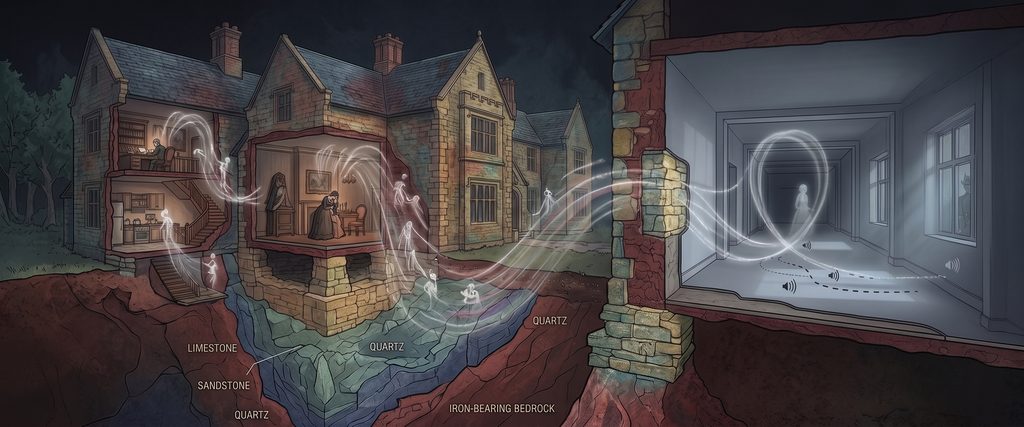
The concept was popularized in parapsychology following research by British archaeologist T.C. Lethbridge in the mid-20th century and the 1972 BBC television play The Stone Tape. The model explains why residual phenomena operate strictly as non-conscious loops: phantom footsteps walking along a corridor that formerly existed before a renovation, or an apparition seen looking through a window at the exact same hour every autumn.
Because stone tape replays lack intelligence, they do not react to investigative questions or trigger devices. Researchers studying this phenomenon track correlations between recurring activity and localized environmental triggers, such as barometric pressure changes, high humidity, geomagnetic shifts during solar flares, or electrical construction work that physically stresses the stone or bedrock foundation.
Was this document helpful?
Thank you for your feedback!