
Ectoplasm
Ectoplasm is a term coined in the late 19th century by Nobel laureate Charles Richet to describe a dense, mysterious, and semi-solid substance purportedly excreted by physical mediums during deep trance states. In the height of the Spiritualist movement, this anomalous matter was believed to be the raw spiritual energy of the human body manifesting in the physical realm. Mediums claimed that discarnate spirits would manipulate this viscous material to form temporary vocal cords for direct voice communication, or even mold it into visible faces and limbs to interact with the living.
Historically, witness accounts describe ectoplasm as appearing in various states: sometimes as a luminous, vaporous mist, and other times as a thick, gelatinous paste or cobweb-like membrane. It was typically reported to exude from the medium’s bodily orifices—most commonly the mouth, nose, or ears—and was said to be highly photosensitive. Mediums argued that exposing ectoplasm to sudden bright light, such as a camera flash, would cause the substance to rapidly “snap back” into the medium’s body, allegedly causing severe internal trauma or even death.
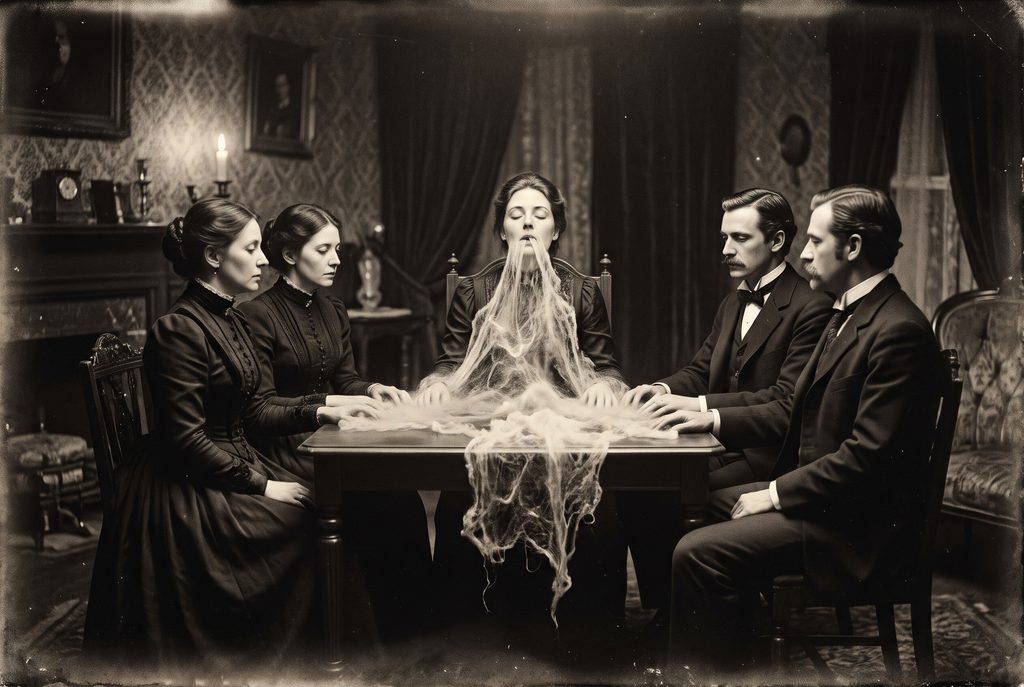
From a modern investigative and parapsychological standpoint, the golden age of ectoplasm is largely viewed through the lens of widespread theatrical fraud. Rigorous debunking efforts by researchers (and famously by illusionist Harry Houdini) revealed that the vast majority of ectoplasmic manifestations were staged using cleverly concealed materials. Fraudulent mediums frequently utilized regurgitated cheesecloth, muslin coated in egg whites, chewed paper, or even animal tissue hidden in the séance room or concealed on their person to simulate the substance.
Today, reports of genuine physical ectoplasm are exceptionally rare. While modern investigators occasionally capture strange, mist-like vapors on infrared cameras, these are almost entirely classified as thermal breath condensation, cigarette smoke, or localized fog rather than the tangible, physical excretions of the past. When investigating claims of physical residue left behind by an entity, field protocols dictate that investigators collect sterile swab samples of the material for rigorous laboratory chemical and spectroscopic analysis to identify mundane origins.
Was this document helpful?
Thank you for your feedback!