
Thermal Imaging (FLIR)
Thermal Imaging Cameras, frequently referred to by the acronym FLIR (Forward-Looking Infrared), utilize specialized microbolometer sensors to detect long-wave infrared radiation (LWIR) in the 8 to 14 micrometer spectrum. Unlike night vision cameras that require ambient or infrared illumination to reflect off physical surfaces, thermal cameras measure the intrinsic heat radiation emitted by all physical objects above absolute zero (-273.15°C), converting radiant heat energy into a calibrated, color-graded radiometric map.
In field investigations, thermal cameras are the primary tool for verifying reported cold spots and thermodynamic anomalies. Paranormal hypotheses suggest that when discarnate entities attempt physical manifestation, kinetic movement, or vocalization, they siphon ambient thermal kinetic energy from the surrounding air, creating localized thermodynamic sinks. A thermal imager allows investigators to observe the exact spatial geometry, thermal gradient, and directional movement of these anomalies as coherent, free-floating masses rather than static floor drafts.
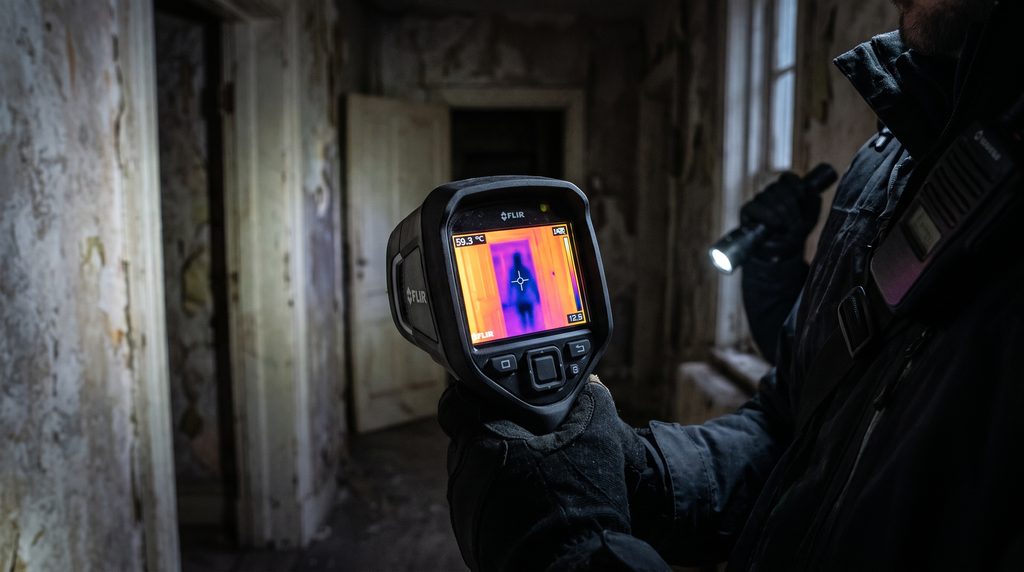
Interpreting thermal imagery requires extensive knowledge of material emissivity and thermal reflection. Highly polished surfaces—including glass windows, mirrors, glazed tiles, polished stone, and varnished hardwood—act as thermal mirrors, reflecting the body heat of the investigator back into the camera sensor and generating an apparent phantom humanoid silhouette. Additionally, convective downdrafts from uninsulated window frames, evaporative cooling from hidden wall moisture, and heat registers concealed behind baseboards must be eliminated before verifying a thermal anomaly.
Was this document helpful?
Thank you for your feedback!