
Trigger Object Methodology
Trigger Object Methodology is an experimental investigative practice involving the deliberate placement of specific physical artifacts designed to resonate with the historical, cultural, or emotional background of an alleged entity. Common trigger objects include antique toys for reported child spirits, vintage tools, period currency, playing cards, religious icons, or personal belongings linked to a former occupant. The objective is to stimulate an interactive acoustic, kinetic, or electromagnetic response by introducing a recognizable catalyst into the environment.
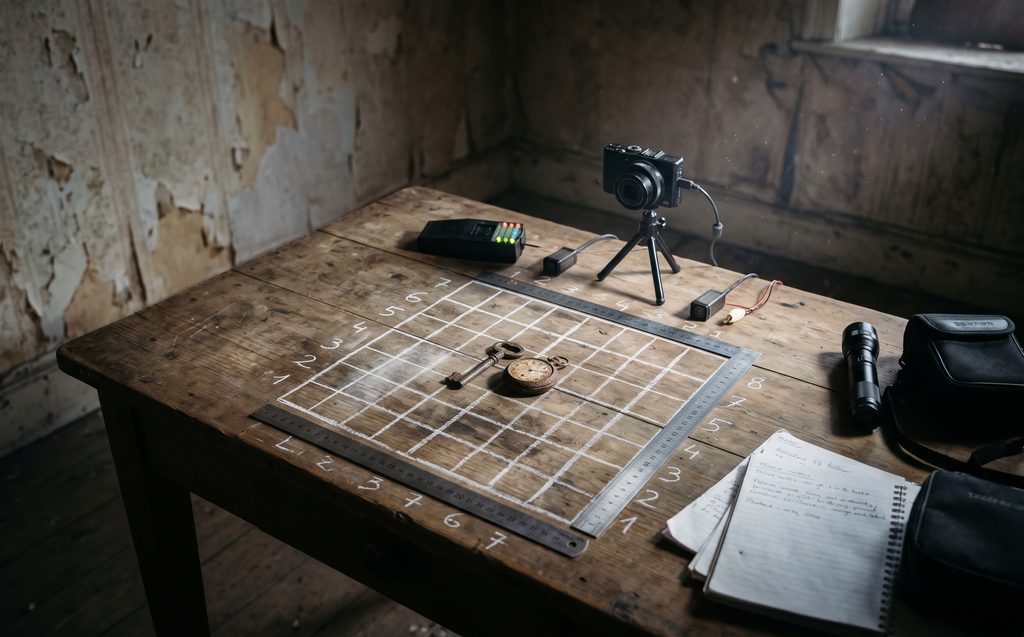
When executing a trigger object session, investigators establish a controlled physical baseline. The item is placed on a completely level, vibration-damped surface—often within an acrylic isolation case or bordered by precise high-contrast chalk grids and measurement rulers. A dedicated static camera is locked onto the object under continuous night-vision or full-spectrum lighting, accompanied by environmental sensors such as proximity alarms, micro-force scales, or thermal probes.
Validating kinetic movement of a trigger object requires the strict elimination of mundane mechanical forces. Investigators must verify that drafts from heating vents, building subsidence, door slams in adjacent corridors, and thermal expansion or warping of the underlying surface did not impart kinetic momentum. Only when displacement occurs in an environment isolated from micro-tremors, air currents, and human proximity can the interaction be considered anomalous.
Was this document helpful?
Thank you for your feedback!