
Geophone Vibration Monitoring
A Geophone is a high-sensitivity seismic transducer originally engineered for geophysical exploration and structural monitoring, adapted by parapsychological researchers to measure kinetic anomalies. The core operating mechanism consists of a spring-mounted magnetic coil suspended within an internal permanent magnetic field. When mechanical vibrations travel through floorboards, walls, or architectural foundations, the relative movement between the coil and magnet produces an analog electrical voltage proportional to the velocity of the shockwave. Modern field units convert this voltage into calibrated visual LED arrays and audible pitch tones.
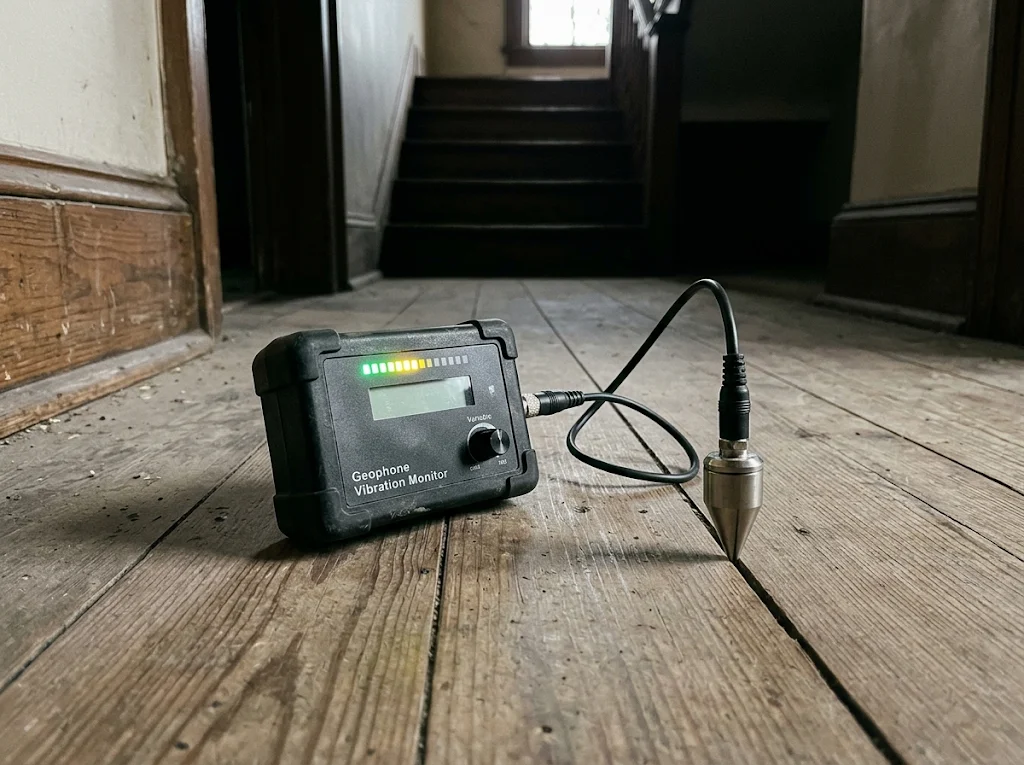
In paranormal field investigations, geophones are deployed to document physical impacts, unembodied footfalls, and poltergeist-style percussive raps. Unlike traditional audio microphones that capture acoustic airborne pressure waves, a geophone exclusively measures tactile mechanical displacement through solid matter. By placing multiple geophones across a hallway, staircase, or perimeter boundary in synchronized arrays, investigators can track the physical trajectory, directionality, and velocity of unexplained footsteps in real time.
Debunking geophone triggers requires rigorous environmental baseline logging. Common false positives include low-frequency acoustic bass reverberations, HVAC compressor spin-ups, structural settlement along load-bearing joists, and external seismic disturbances such as heavy commercial transport trucks or freight trains passing miles away. Investigators must establish a baseline sensitivity threshold and cross-reference all triggers against synchronized time-stamped video and exterior acoustic monitoring before classifying a spike as an anomaly.
Was this document helpful?
Thank you for your feedback!